
AI as a Thinking Multiplier
How I turned a research paper into a system that forces better thinking

In the last article, I used AI to understand a research paper.
This time, I used that paper as input, but the value didn’t come from it.
It came from what I did next: the ideation phase.
The Step Everyone Skips
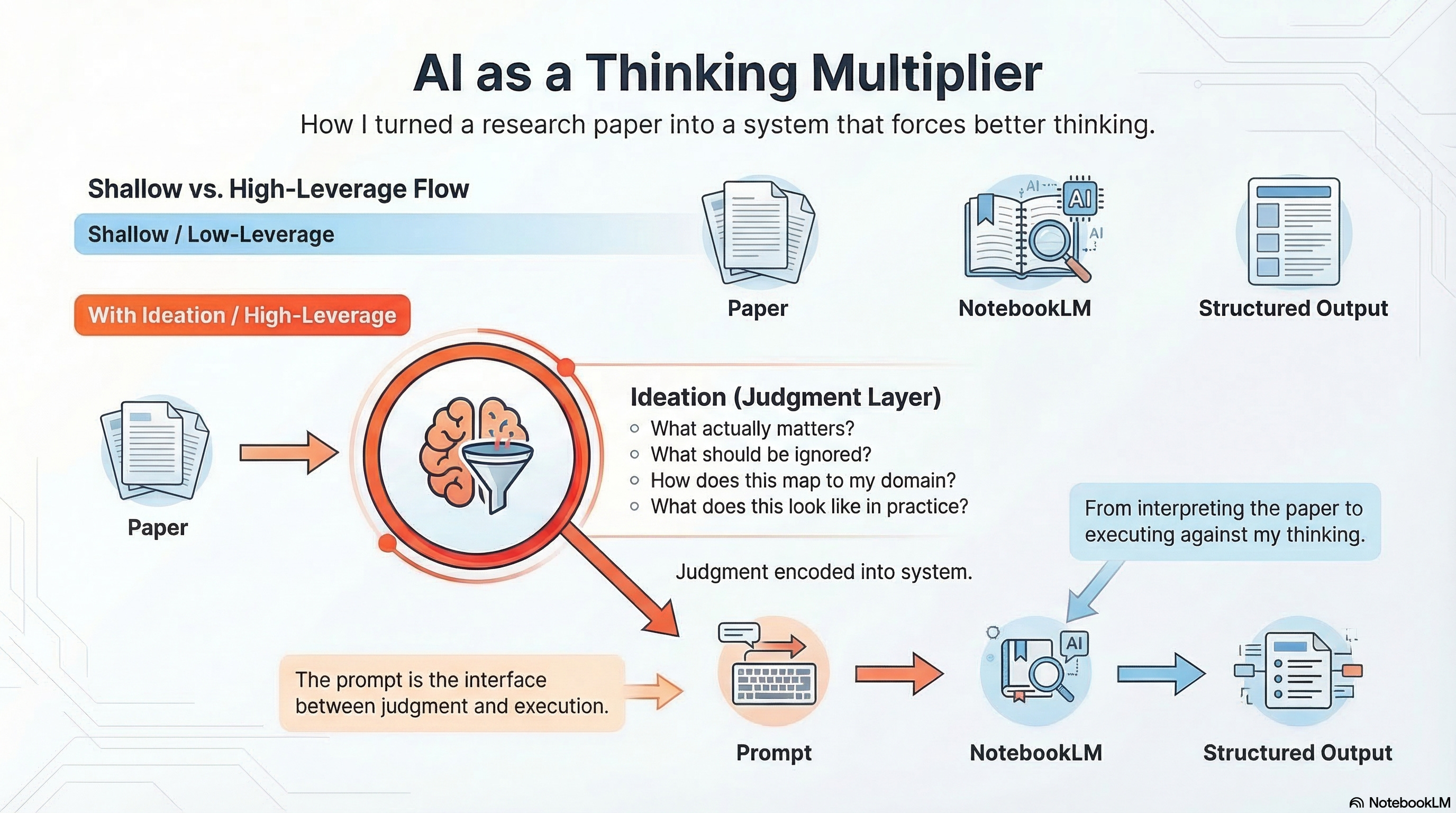
Shallow information sharing looks like this:
Paper → NotebookLM → Structured OutputIt’s efficient, but low-leverage.
Where the Value Is Created
I insert a step:
Paper →Ideation → Prompt → NotebookLM → Structured Output
          ↑
      Judgment Layer
The ideation phase is where I apply judgment:
What actually matters?
What should be ignored?
How do these ideas map to my domain?
What would this look like in practice?
This is where leverage is created: the thinking doesn’t stay in my head. Instead, it gets encoded into a prompt.
At that point, the prompt is the interface between judgment and execution.
NotebookLM is no longer interpreting the paper; it is executing against my thinking.
From Judgment → Friction
One insight from that ideation:
Good thinking doesn’t happen by default. It has to be required.
That’s where friction comes in: mindfully applied at decision points.
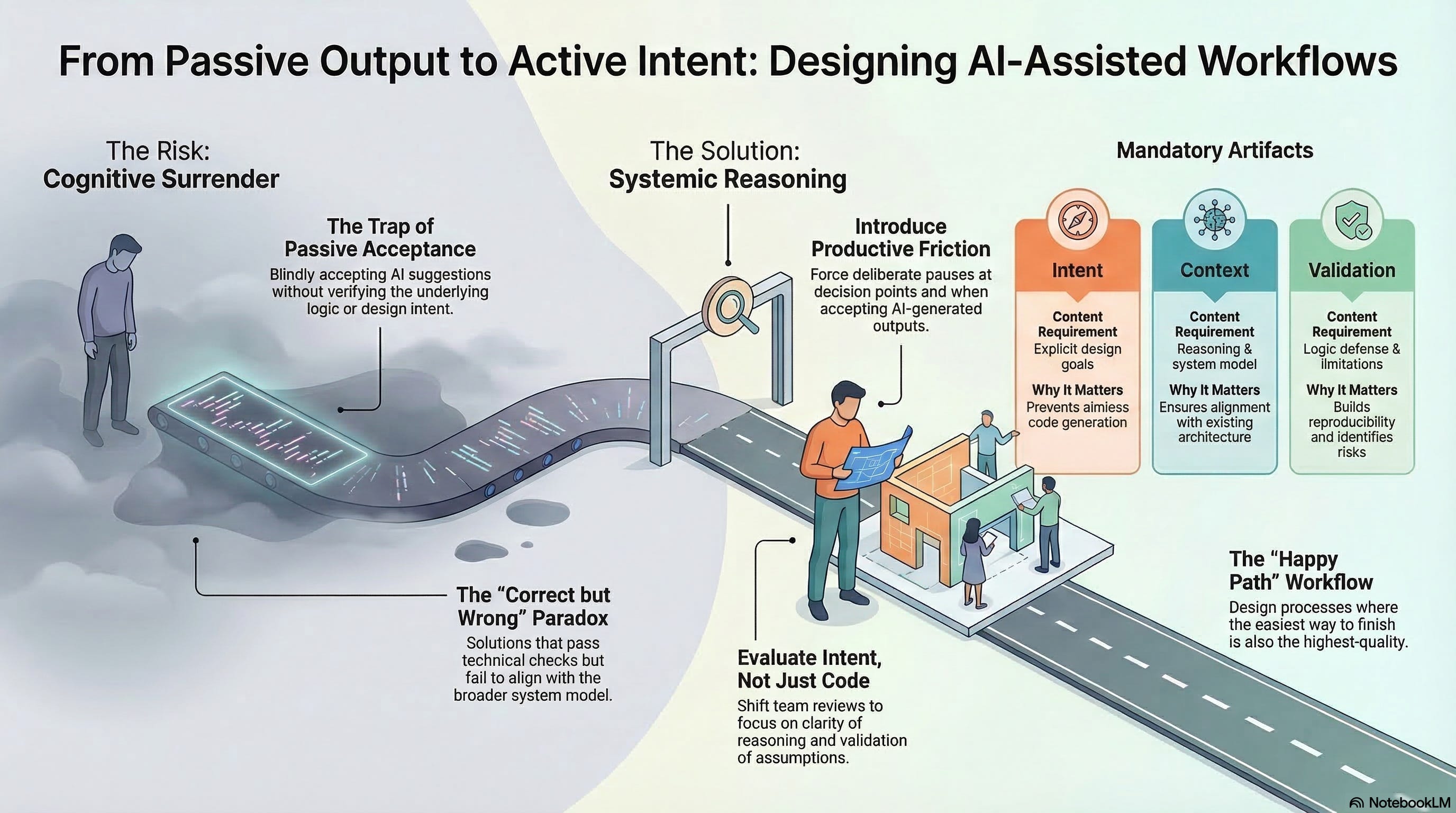
As the summary discusses, the system enforces:
explicit intent
stated assumptions
defined validation
justified implementation
This isn’t overhead. It’s judgment, made operational.
The Actual Shift
This is the shift: not using AI to generate better outputs.
But using judgment to design better systems
This amplifies your impact and elevates the people around you.
Why This Matters
AI-augmented engineering and analytics are driving orders-of-magnitude gains in productivity (often at the expense of quality).
Shipping more code or completing more analyses is no longer a sufficient measure of impact. The focus is shifting to include how we elevate thinking & quality across the team:
Strong leaders design systems that raise the bar for everyone.
Standout individual contributors do the same: using team uplift as a force multiplier for both impact and influence.
The more people we elevate, the greater the impact we create.
If You Want the Details
I’ve included the full prompt and output in the NotebookLM notebook.
You can see exactly how the ideation phase translates into a system—and how that system enforces better thinking.
What’s Next
In the next piece, I’ll go deeper into the mechanism:
Why forcing articulation improves reasoning.
How friction increases velocity.
What this looks like inside a real team workflow.